It’s one of those questions people don’t always think about until it comes up in conversation—does it really matter when you brush your teeth, or is brushing twice a day enough? Most of us grew up hearing that we should brush in the morning and before bed, but if you had to choose, which one actually matters more?
The truth is, both play an important role in your oral health, but they do very different jobs. Understanding that difference can help you take better care of your teeth without overthinking your routine.
Why Morning Brushing Feels So Important
Let’s be honest—nobody likes waking up with that dry, slightly unpleasant taste in their mouth. Morning brushing is often more about feeling fresh and starting the day right. But there’s more going on than just bad breath.
While you sleep, your mouth produces less saliva. That gives bacteria a chance to multiply overnight. These bacteria feed on leftover food particles and release acids that can affect your enamel. That’s why you wake up with what people call “morning breath.”
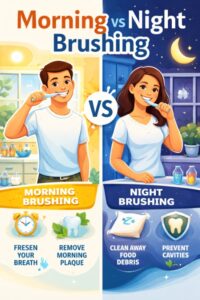
Brushing in the morning helps remove that buildup and gives your mouth a clean start. It also coats your teeth with fluoride from your toothpaste, which adds a layer of protection before you eat your first meal. That’s why morning brushing benefits go beyond just fresh breath—they help reset your mouth after a long night.
What Happens If You Skip the Morning Brush
Skipping your morning brush might not seem like a big deal if you’re rushing out the door. But over time, it can allow bacteria to stay active on your teeth and gums throughout the day.
When you eat breakfast without brushing first, you’re basically feeding those bacteria. They produce more acid, which increases the risk of plaque buildup and eventually cavities. That’s why dentists often recommend brushing before breakfast or waiting a little while after eating.
It’s a small habit, but it makes a noticeable difference in keeping your mouth balanced and healthy.
Why Night Brushing Might Matter Even More
Now let’s talk about nighttime brushing. If morning brushing is about starting fresh, brushing at night is about cleaning everything away before your body rests.
Throughout the day, your teeth collect food particles, plaque, and bacteria. Even if you don’t notice it, there’s a constant buildup happening with every meal and snack. If you go to bed without brushing, all of that stays in your mouth for hours.
At night, saliva production drops again, which means your mouth has less natural protection. Bacteria get more time to sit on your teeth, produce acids, and irritate your gums. This is why night brushing importance is often emphasized more strongly by dental professionals.
In simple terms, going to bed without brushing is like leaving your teeth unprotected during their most vulnerable time.
The Risk of Skipping Night Brushing
If you’ve ever felt too tired and skipped brushing before bed, you’re not alone. But making it a habit can lead to problems faster than you might expect.
Plaque that isn’t removed hardens into tartar, which can’t be brushed away at home. This can lead to gum inflammation, bad breath, and eventually more serious conditions like gum disease. Over time, it also increases your chances of cavities.
That’s why many dentists say if you had to choose just one, brushing teeth at night would be the one you shouldn’t skip.
So, Which One Matters More?
Here’s the honest answer—both matter, but for different reasons. Morning brushing protects your teeth as you start your day, while nighttime brushing protects them while you sleep.
If you’re looking at it from a purely preventive standpoint, nighttime brushing has a slight edge because it removes the entire day’s buildup and reduces the risk of long exposure to bacteria.
Still, focusing on just one isn’t the best approach. A consistent routine that includes both is what really keeps your teeth in good shape. That’s why brushing twice a day continues to be the standard advice—it covers both sides of the equation.

Building a Routine That Works for You
The best oral care routine is one you can stick to every day without feeling rushed or overwhelmed. It doesn’t have to be complicated.
Taking a couple of minutes in the morning and again before bed can go a long way. Pairing brushing with flossing, especially at night, helps remove debris from places your toothbrush can’t reach.
At Vue Dental Kyle, patients often ask if timing really makes a difference. The answer usually comes down to consistency. When brushing becomes a regular part of your day—like having your morning coffee or setting your alarm at night—it stops feeling like a chore.
Small Habits That Make a Big Difference
It’s not just about when you brush, but how you do it. Using a fluoride toothpaste, brushing gently for at least two minutes, and replacing your toothbrush regularly all play a role in keeping your teeth healthy.
If you tend to rush through brushing at night, try slowing it down just a bit. That’s the time when your teeth need the most attention. Giving them a proper clean before bed can help prevent problems that are much harder to fix later.
Over time, these small adjustments can improve your overall oral hygiene routine without requiring major changes.
Listening to Your Teeth
Your mouth often gives you clues about your habits. If you notice persistent bad breath, sensitivity, or gum irritation, it might be a sign that your brushing routine needs some attention.
Regular dental visits also help catch issues early. At Vue Dental Kyle, many patients are surprised to learn that small changes in their daily routine can make a noticeable difference in their dental health.
Sometimes, it’s not about doing more—it’s about doing the basics consistently and correctly.

Final Thoughts
When it comes to morning vs night brushing, it’s not really about choosing one over the other. Each has its own role in keeping your teeth clean and healthy.
Morning brushing helps you start the day fresh and protected, while nighttime brushing clears away everything your teeth have collected and keeps them safe while you sleep. If there’s one habit you don’t want to skip, it’s brushing before bed—but ideally, both should be part of your daily routine.
At the end of the day, your smile reflects the care you give it. And sometimes, it’s the simplest habits—done regularly—that make the biggest difference.